
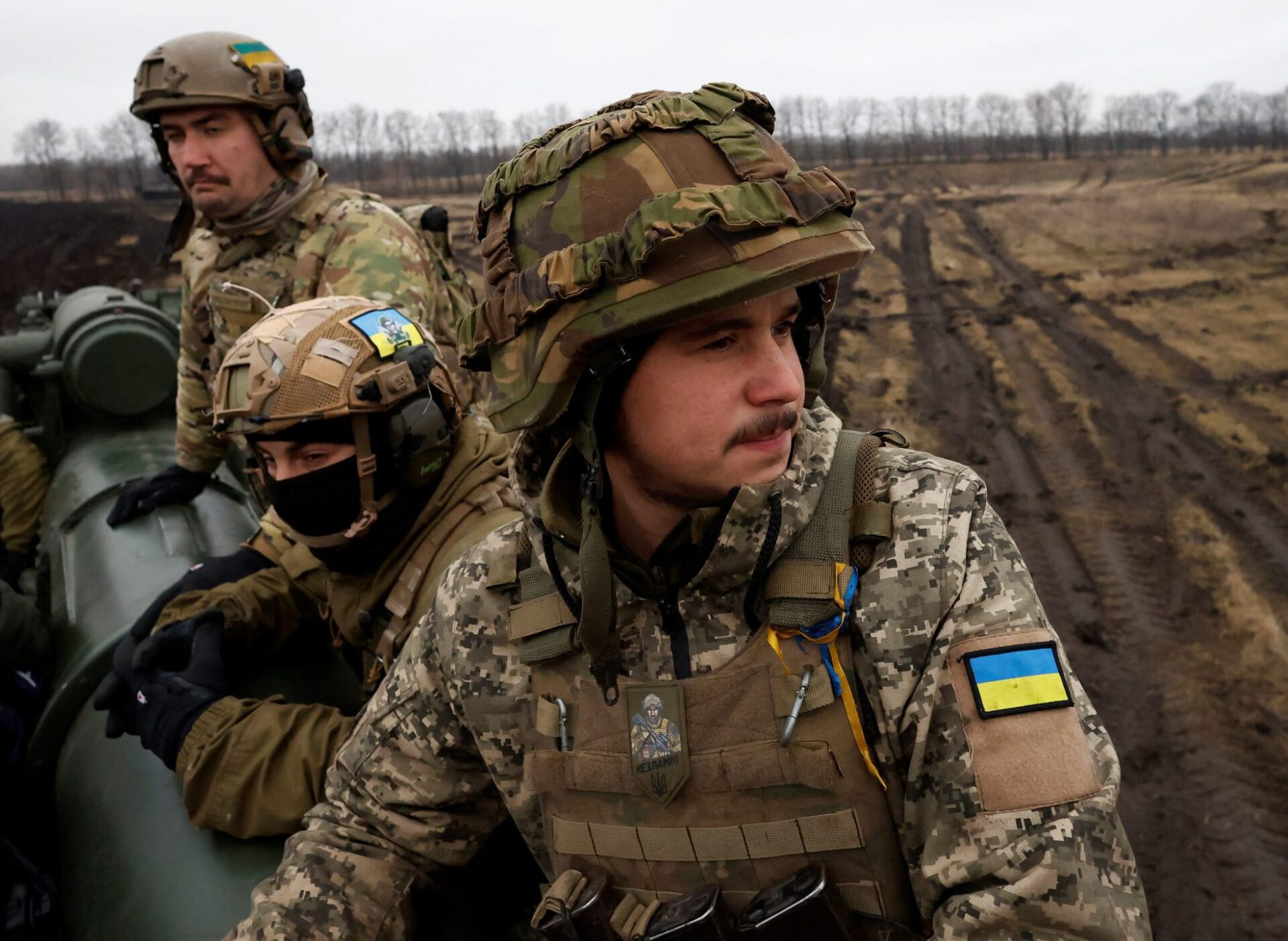
Ukraine's Third Army Corps is pressing its robotic-warfare breakthrough around Lyman into a second phase, with new assault footage purporting to show Ukrainian infantry moving through the Donetsk sector on the heels of the robot-led breach. The development follows the corps' disclosure last week that the secretive first phase of "Operation Vivaldi" — the first operation anywhere to airdrop ground combat robots behind enemy lines — killed or wounded around 3,000 Russian troops and reclaimed 48 square miles of occupied territory.
A video published on September 27 by the Ukrainian war-update channel Denys Davydov frames the new push explicitly as "Vivaldi Operation Phase 2," describing Russian positions around Lyman being methodically dismantled and carrying GoPro-style footage attributed to the Third Army Corps' assault troops. The video itself is members-only, so its specific battlefield claims cannot be independently verified. But they land in a context Ukrainian officials have been describing openly for days — one in which the Lyman sector has become the sharp edge of Ukraine's 2026 counter-offensive effort.
What Vivaldi's first phase achieved
The details released last week were striking. Operation Vivaldi began in May as a covert campaign in which heavy bomber drones dropped small four-wheeled kamikaze ground robots — unmanned ground vehicles — up to nine miles behind the Russian frontline. The robots, guided by cameras mounted on their frames, then drove themselves into Russian command posts, shelters, logistics hubs and river crossings.
The Third Army Corps says the unit completed more than 15,700 such missions. The results, according to the corps, include roughly 3,000 Russian soldiers killed or wounded, five villages and three settlements recaptured in the Donetsk region, and some 48 square miles of occupied territory retaken. "We're the first in the world to use this tactic — dropping ground robots," the corps' commander, Gen. Andrii Biletskyi, said on YouTube. "The enemy expects the threat from the sky, not the ground. Where the enemy least expected it, dead and wounded Russian soldiers appeared."
Those figures have not been independently verified — Ukraine's casualty claims for Russian forces, like Russia's own, should always be treated as single-source assertions. But the operation's geographic footprint is real enough: Russia still occupies roughly 80 percent of Donetsk, and any clawback there is strategically significant because Vladimir Putin has made the full seizure of the Donbas his central war aim.
Lyman remains the pressure point
Ukraine's General Staff continues to describe the Lyman sector as an active fighting front. In its September 26 update, the General Staff reported 221 combat engagements across the front over the previous day, including 12 Russian assaults in the Lyman direction. A day later, as of 22:00 on September 27, it reported 197 engagements, 64 Russian air strikes dropping 196 guided bombs, 5,565 kamikaze drone sorties and 2,132 shelling attacks — with five Russian attempts to advance near Zarichne, Lyman and Dibrova repelled and one more engagement still underway.
That fighting fits a pattern the Institute for the Study of War has been flagging for weeks: Moscow inflating its claimed gains around Sumy to distract from Ukrainian advances near Lyman, where the Third Army Corps has been operating. The heaviest Russian pressure remains further south — the General Staff counts 26 attacks each in the Kostiantynivka and Pokrovsk sectors — but Lyman is where Ukraine is pressing, not just holding.
The broader arithmetic favors persistence over breakthrough. On September 27, the General Staff estimated Russian personnel losses at 1,690 in a single day, bringing the claimed total since February 2022 to roughly 1,529,000. President Volodymyr Zelenskyy, citing commander-in-chief Mykhailo Drapatyi, said Ukrainian forces killed or wounded about 10,660 Russian soldiers over the past week. These are Ukrainian claims, unverifiable, but they describe a tempo of attrition Russia has struggled to sustain.
A tactic designed to keep soldiers alive
Vivaldi's second phase matters less for any single village than for what it demonstrates: Ukraine is converting tactical innovation into a repeatable method. Phase one sent machines into the kill zone first — striking Russian command and logistics nodes from behind. Phase two sends in soldiers to consolidate ground that has already been hollowed out by robot strikes, with the new footage suggesting close assaults through the Lyman sector's contested treelines and river crossings.
It is the same logic behind Kyiv's broader push to take Ukrainian troops out of the line of fire — from Deputy Prime Minister Mykhailo Fedorov's "Army of Robots" initiative to the air-dropped ground-vehicle offensives already underway in Donetsk. Every robot that clears a trench is a soldier who does not have to. Against an adversary that still treats its infantry as expendable, that asymmetry is Ukraine's most reliable advantage.
The operation is far from over. Russia is already adapting, and its drone and artillery density around Donetsk remains formidable. But Vivaldi has given Ukraine something it lacked through much of 2025: a proven way to take ground without trading lives for it one for one. If phase two follows the pattern of phase one, Lyman may not be the only sector where Russian rear-area troops start looking nervously at the ground as well as the sky.
Watch our latest video coverage here: https://www.youtube.com/watch?v=oH2FxhmC3i8